
Field Trips and Educational Programs
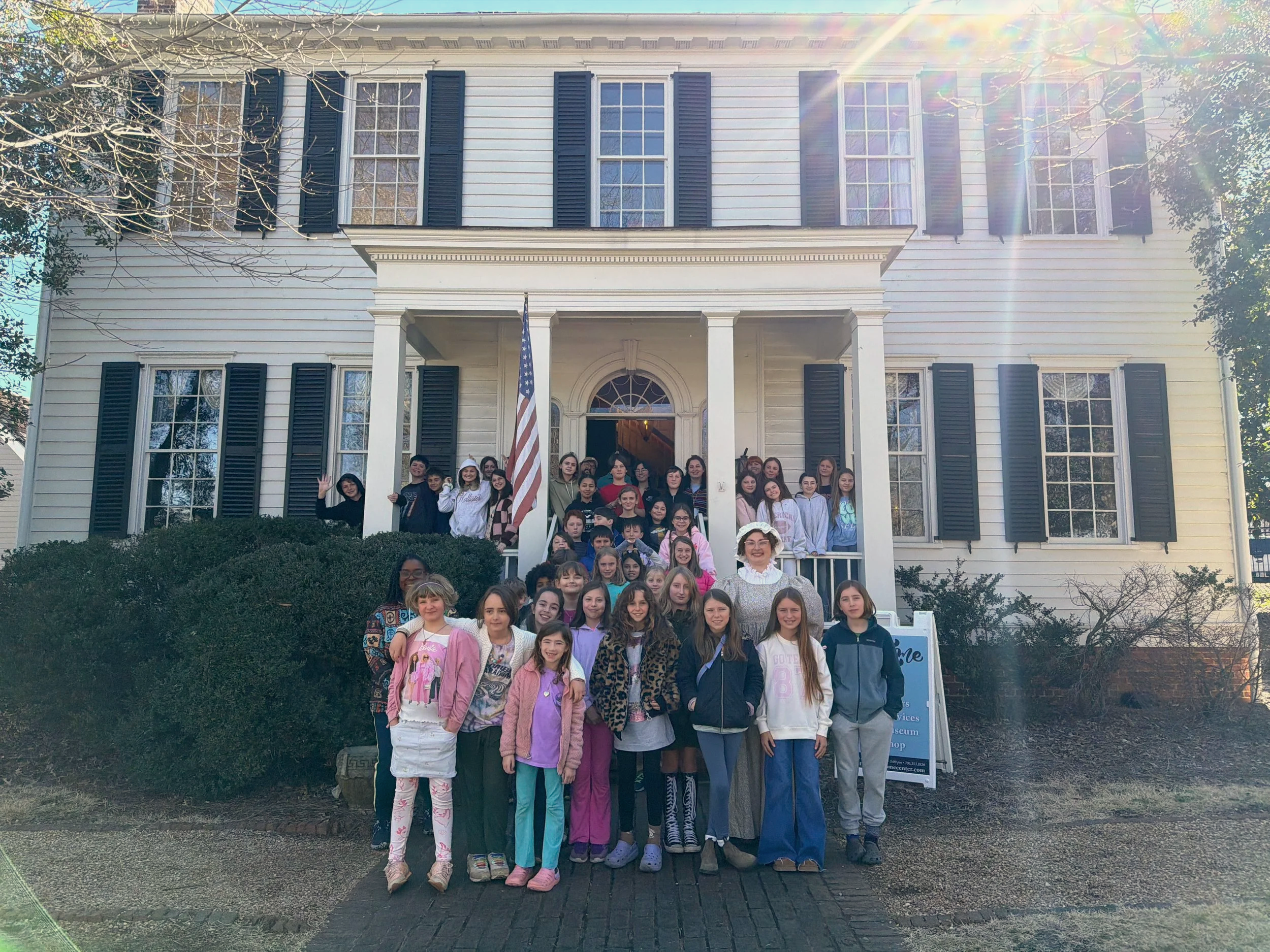
The Church-Waddel-Brumby House Museum (ca. 1820), located at the Historic Athens Welcome Center, is your destination for memorable and educational field trips in Athens, Georgia. We love hosting students and youth groups for engaging, standards-aligned field trips that bring local history to life.
Who We Serve
K–12 school groups
Homeschool co‑ops and micro schools
Summer camps and after-school programs
Girl Scouts, Boy Scouts, and other youth organizations
Free Field Trip Eligibility
We are proud to offer free field trips for:
All Clarke County School District schools
Nonprofit community partner youth programs
After-school and summer programs serving low‑income or underserved students
Homeschool groups meeting specific income‑based criteria
Scout troops whose members are majority from underserved communities
Funding for these programs is limited and provided through grants and donations. Free field trips are scheduled on a first‑come, first‑served basis.
1800s Daily Life Program
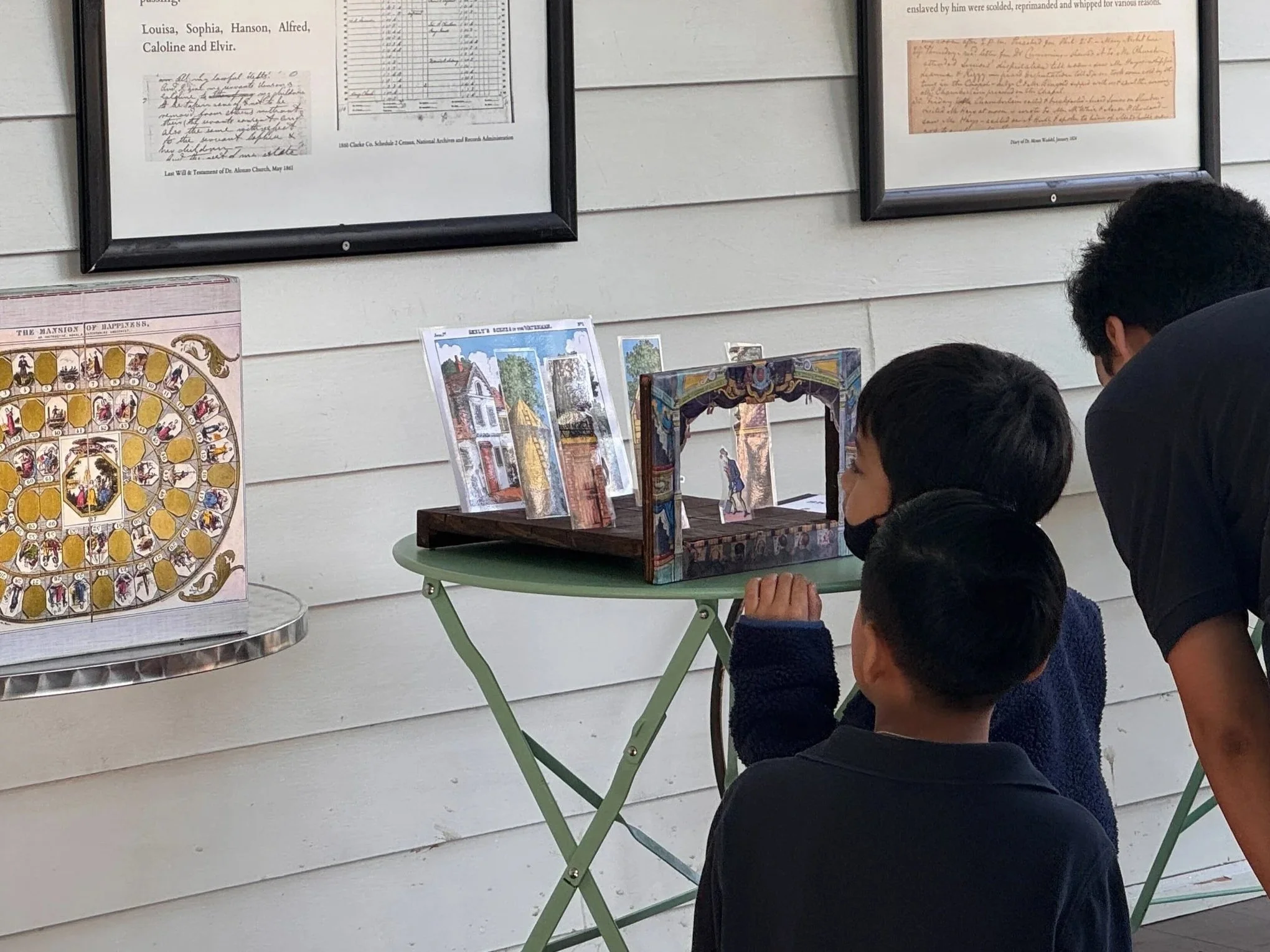
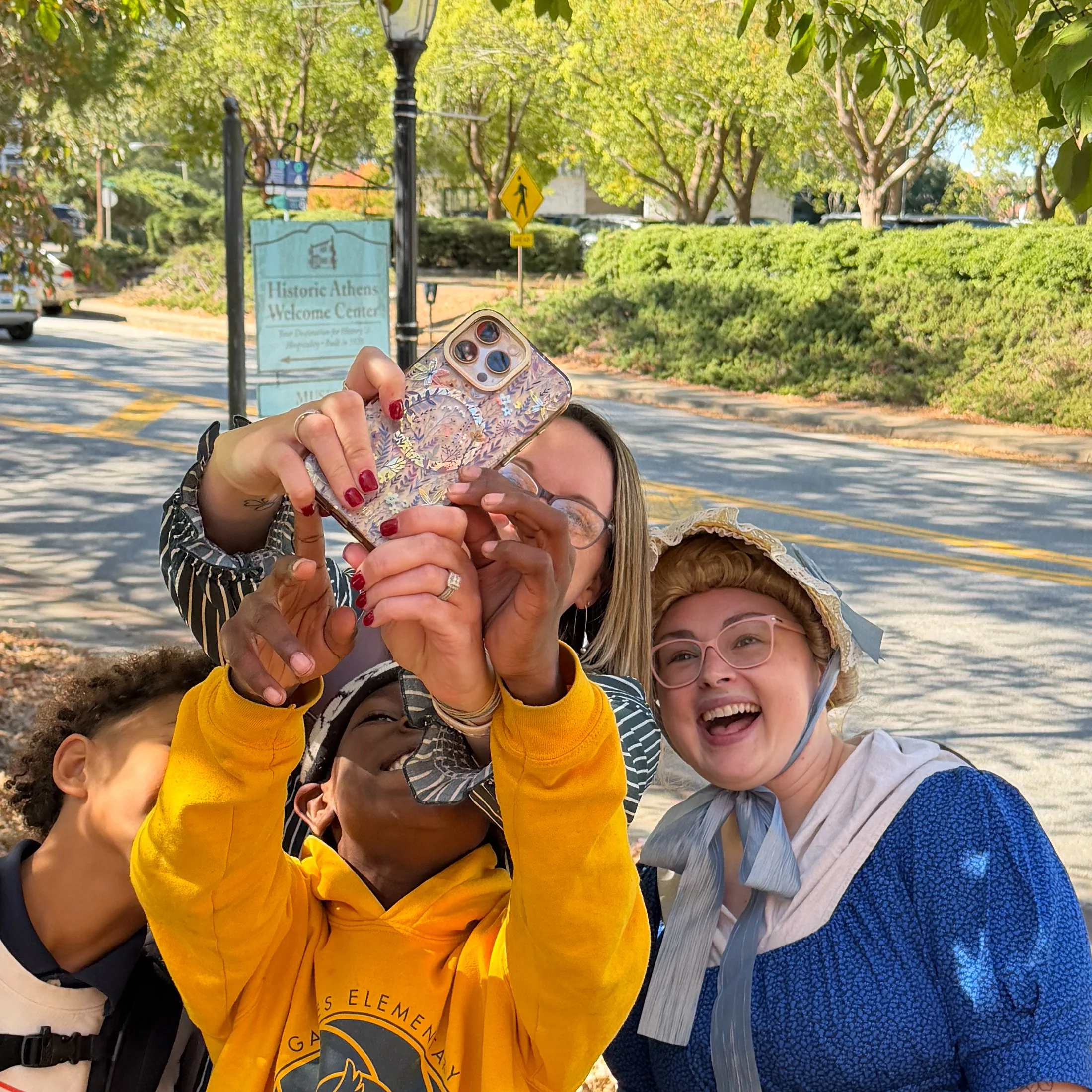
This interactive program teaches students about everyday life in the early 1800s through hands-on activities with historically accurate reproduction items. From toys and games to laundry and foodways, students will rotate through activity stations with friendly guides.
Maximum Capacity: 80 students + Teachers & Chaperones
Program Length: 1-1.5 hours for groups of less than 50; 2-2.5 hours for groups of 50-80.
Policies: Please review our policies at this link before submitting your request.
-
SS1E1 Identify goods that people make and services that people provide for each other.
SS1E2 Explain that scarcity is when unlimited wants are greater than limited resources.
SS1E3 Describe how people are both producers and consumers.
SS1E4 Explain that people earn income by working and that they must make choices about how much to save and spend.
SS2E1 Explain that because of scarcity, people must make choices that result in opportunity costs.
SS2E2 Identify some ways in which goods and services are allocated (such as: price, majority rule, contests, force, sharing, lottery, authority, first-come-first-served, and personal characteristics).
SS3H3.c Describe colonial life in America from the perspectives of various people: large landowners, farmers, artisans, women, children, indentured servants, slaves, and American Indians.
SS3E3.c Explain that some goods are made locally, some elsewhere in the country, and some in other countries.
SS4E1.b Explain how price incentives affect people's behavior and choices: decisions about what crops (e.g., cotton, and tobacco) to grow and products (e.g., textiles) to produce.
SS8H4.a Explain reasons for the establishment of the University of Georgia, and for the westward movement of Georgia's capitals.
SS4E1.c Describe how specialization improves standards of living (e.g., differences in the economies in the North and South).
SS8H4.c Explain how technological developments, including the cotton gin and railroads, had an impact on Georgia's growth.
-
Toys & Games - Learn about and play with the common toys and games that entertained children of the early 1800s including ball-and-cup, whirligigs, marbles, corn husk dolls, graces, hoop and trundle, jump rope, and others.
Music - Try out popular musical instruments and listen to music demonstrations including fiddle, harmonica, the bones, spoons, fife, and penny whistle.
Foodways - Touch and smell common herbs and spices, help to churn butter, learn about food preservation methods, grind coffee and smell varieties of tea, grind corn, and more!
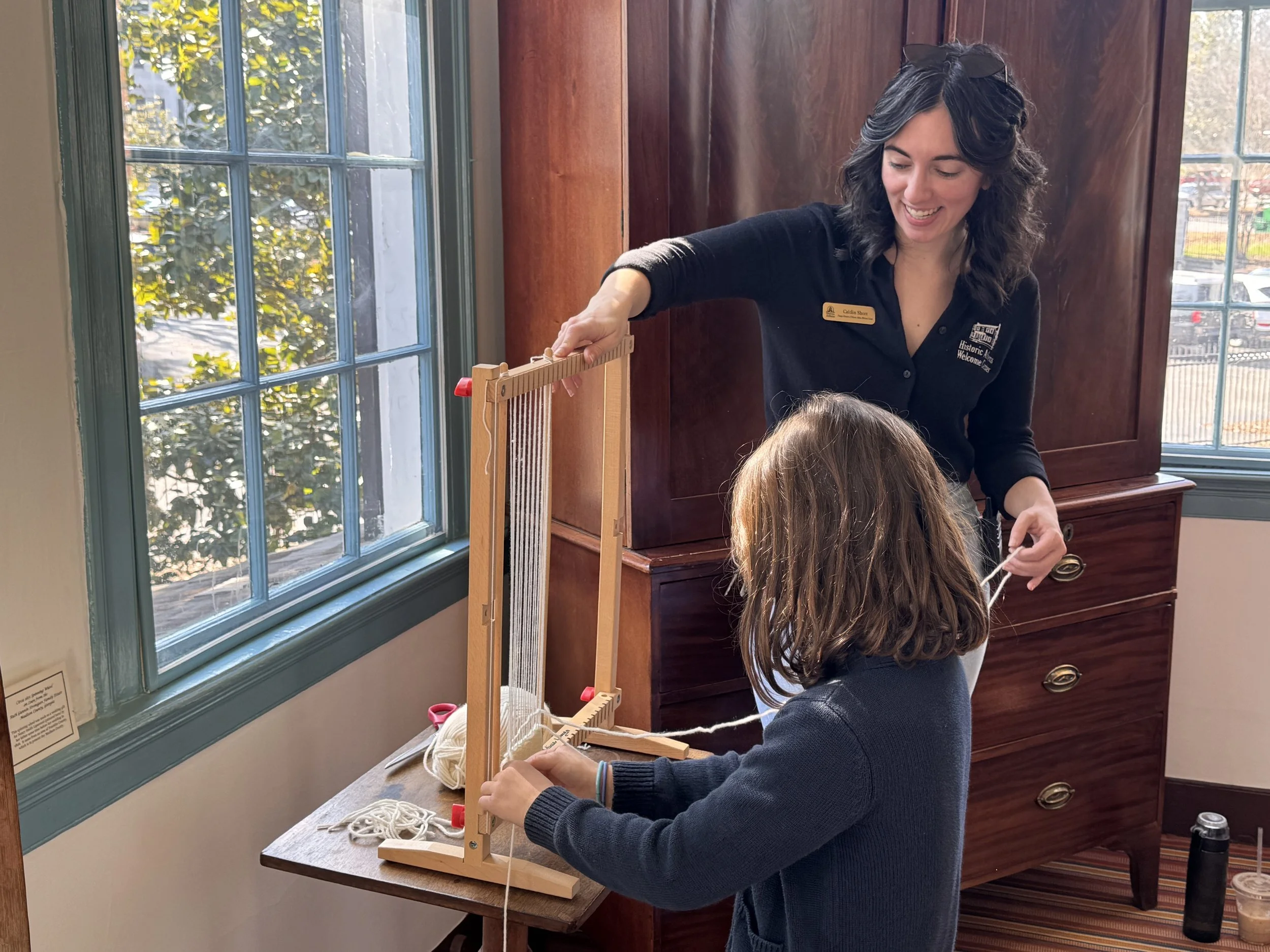
Textiles & Fashion - Touch common fabrics of the period, view an antique spinning wheel and learn how yarn is made, help weave yarn on a loom, and view historically accurate reproduction clothing.
Laundry - Watch and assist in a laundry demonstration to learn how soap was made and the various techniques used by professional washerwomen of the early 1800s.
Mini-Walking Tour - Enjoy a short guided walking tour to City Hall and back to learn about historic sites in Athens with a fun “I Spy” game along the way.
-
Regular Pricing: $10 per student with a minimum charge of $120 per group.
Free Field Trip Eligibility
Thanks to grants and donations, free field trips are available for:All Clarke County School District schools
Nonprofit youth programs run by community partners
After-school and summer programs serving low-income or underserved students
Homeschool groups meeting income-based guidelines
Scout troops with a majority of members from underserved communities
Free field trips are offered on a first-come, first-served basis and depend on available staffing.
-
All educators receive a guide for activities and resources to utilize before and after your field trip.
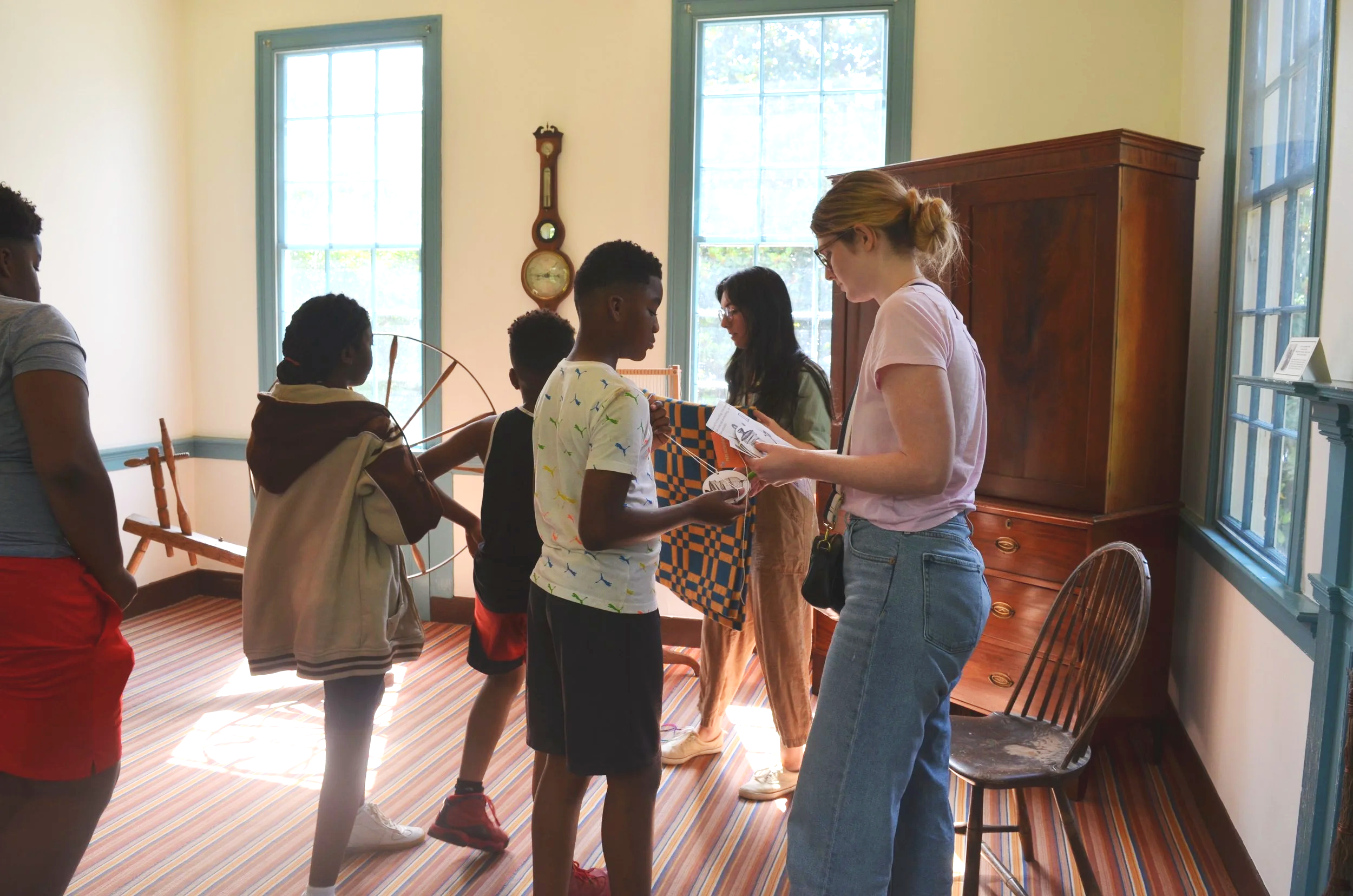
Students will learn about the history of the historic Church-Waddel-Brumby house and its artifacts during a guided tour and scavenger hunt. As students tour the house, they will search for items on the scavenger hunt list and learn about their use in the early 1800s.
Maximum Capacity: 30 Students + Teachers & Chaperones
Program Length: 1-1.5 hours
Policies: Please review our policies at this link before submitting your request.
Guided House Tour & Scavenger Hunt
-
SS1E1 Identify goods that people make and services that people provide for each other.
SS1E2 Explain that scarcity is when unlimited wants are greater than limited resources.
SS1E3 Describe how people are both producers and consumers.
SS1E4 Explain that people earn income by working and that they must make choices about how much to save and spend.
SS2E1 Explain that because of scarcity, people must make choices that result in opportunity costs.
SS2E2 Identify some ways in which goods and services are allocated (such as: price, majority rule, contests, force, sharing, lottery, authority, first-come-first-served, and personal characteristics).
SS3H3.c Describe colonial life in America from the perspectives of various people: large landowners, farmers, artisans, women, children, indentured servants, slaves, and American Indians.
SS3E3.c Explain that some goods are made locally, some elsewhere in the country, and some in other countries.
SS8H4.a Explain reasons for the establishment of the University of Georgia, and for the westward movement of Georgia's capitals.
SS8H4.c Explain how technological developments, including the cotton gin and railroads, had an impact on Georgia's growth.
-
Regular Pricing: $5 per student with a minimum charge of $120 per group.
Free Field Trip Eligibility
Thanks to grants and donations, free field trips are available for:All Clarke County School District schools
Nonprofit youth programs run by community partners
After-school and summer programs serving low-income or underserved students
Homeschool groups meeting income-based guidelines
Scout troops with a majority of members from underserved communities
Free field trips are offered on a first-come, first-served basis and depend on available staffing.
Guided Walking Tour
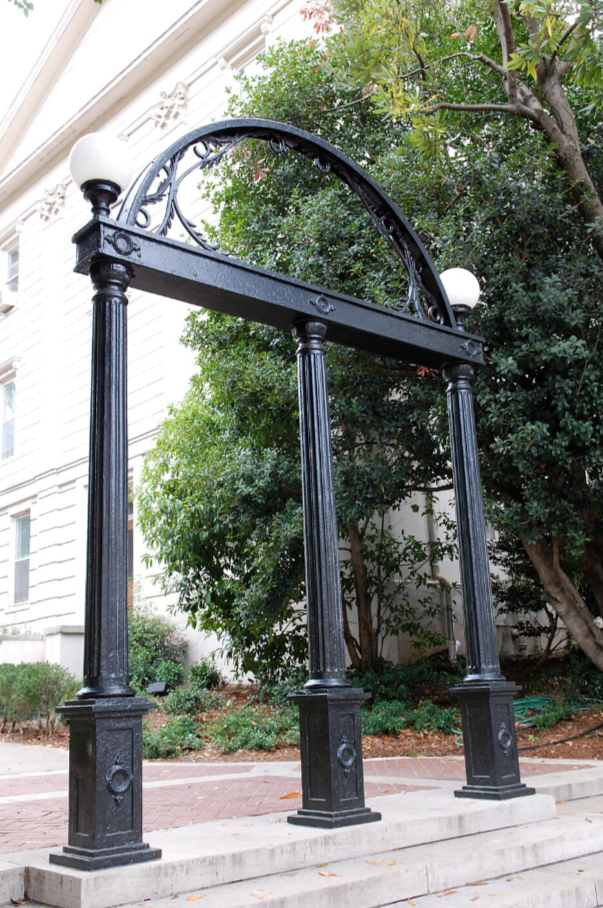
This program is designed for middle and high school students and includes a guided tour of the Church-Waddel-Brumby House and a guided walking tour of downtown Athens and the UGA North Campus.
Maximum Capacity: 30 Students + Teachers & Chaperones
Program Length: 2 hours
Policies: Please review our policies at this link before submitting your request.
-
SS8H4.a Explain reasons for the establishment of the University of Georgia, and for the westward movement of Georgia's capitals.
SS8H4.c Explain how technological developments, including the cotton gin and railroads, had an impact on Georgia's growth.
-
Historic UGA Campus & Arch
City Hall
Double-Barreled Cannon
Athens Foundry
Ware-Lyndon House
Morton Theatre
Georgia Theatre
Fire Hall No. 1
-
Regular Pricing: $5 per student with a minimum charge of $120 per group.
Free Field Trip Eligibility
Thanks to grants and donations, free field trips are available for:All Clarke County School District schools
Nonprofit youth programs run by community partners
After-school and summer programs serving low-income or underserved students
Homeschool groups meeting income-based guidelines
Scout troops with a majority of members from underserved communities
Free field trips are offered on a first-come, first-served basis and depend on available staffing.
Special Request Programs with Living History Interpreter Glen Kyle
Historian and Living History Interpreter Glen Kyle offers field trip programs on the American Revolution and the American Civil War hosted at the Historic Athens Welcome Center. Glen’s programs offer an entertaining and engaging approach to history that can be customized for all ages and meet Georgia Standards of Excellence.
Please note that these programs are offered on a limited schedule and are not included in our free field trip programs.
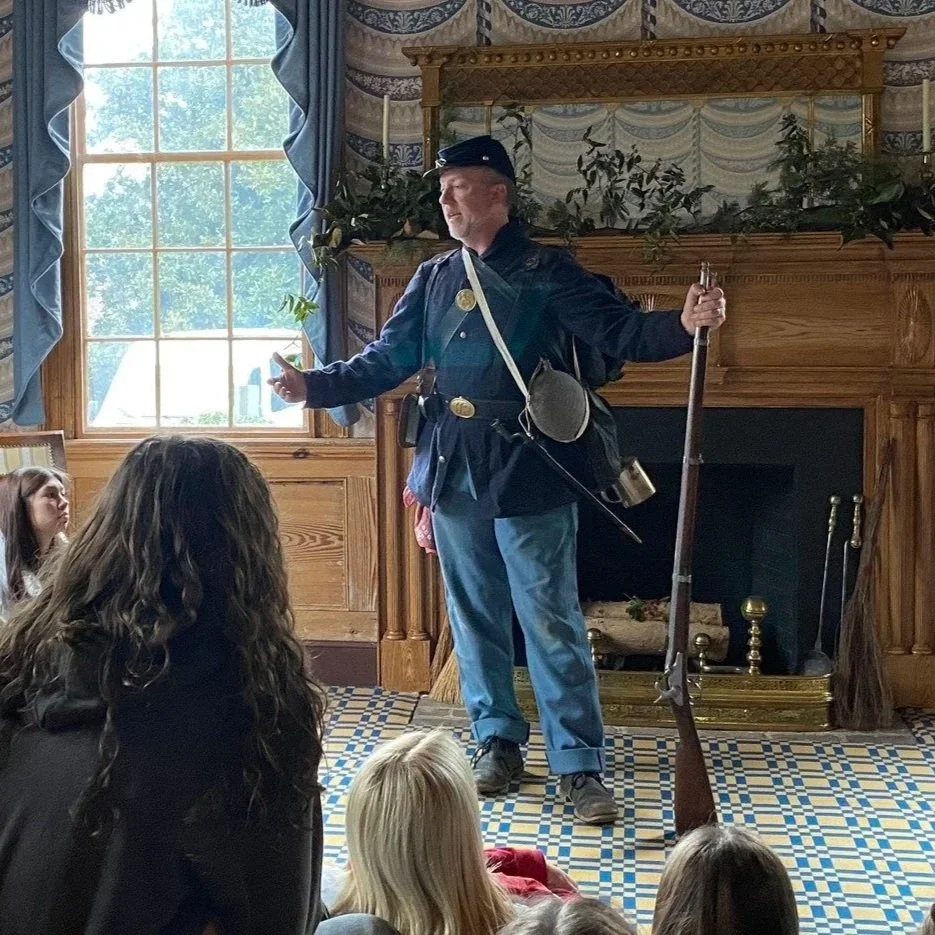
Students will learn about the daily life experiences of the American Civil War Soldier, both Union and Confederate, through historically accurate reproduction items with living history interpreter Glen Kyle in Union uniform.
Program Length: 1 hour including times for questions.
Pricing: $15 per student or a minimum of $250 for 15 or less students.
Maximum Number of Students: 30
Policies: Please review our policies at this link before submitting your request.
The Civil War Soldier
-
SS4H5 Explain the causes, major events, and consequences of the Civil War.
SS4H5.e Describe the effects of war on the North and South.
SS4H5.c Identify major battles, campaigns, and events: Fort Sumter, Gettysburg, the Atlanta Campaign, Sherman's March to the Sea, and Appomattox Court House.
SS4H5.b Discuss how the issues of states' rights and slavery increased tensions between the North and South.
SS8H5 Analyze the impact of the Civil War on Georgia.
SS8H5.a Explain the importance of key issues and events that led to the Civil War; include slavery, states' rights, nullification, Compromise of 1850 and the Georgia Platform, the Dred Scott case, Abraham Lincoln's election in 1860, and the debate over secession in Georgia.
SS8H5.b Explain Georgia's role in the Civil War; include the Union blockade of Georgia's coast, the Emancipation Proclamation, Chickamauga, Sherman's Atlanta Campaign, Sherman's March to the Sea, and Andersonville.
SSUSH9 Evaluate key events, issues, and individuals related to the Civil War
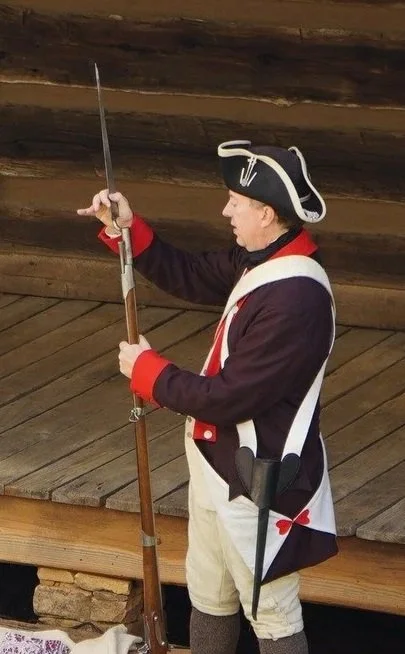
Students will learn about the daily life experiences of the American Revolution Soldier through historically accurate reproduction items with costumed living history interpreter Glen Kyle.
Program Length: 1 hour including times for questions.
Pricing: $15 per student or a minimum of $250 for 15 or less students.
Maximum Number of Students: 30
Policies: Please review our policies at this link before submitting your request.
The American Revolution Soldier
-
SSUSH3 Analyze the causes of the American Revolution.
SSUSH4 Analyze the ideological, military, social, and diplomatic aspects of the American Revolution.
SS8H3 Analyze the role of Georgia in the American Revolutionary Era.
Field Trip Request Form
Please allow at least two weeks’ notice when scheduling a field trip.